26th January 2017

After breakfast, we all gathered in the reception, ready for the short journey to Gupteswar Mahadev. The peaks of Annapurna, crowned with wisps of cloud, glowed in the early morning sun as we boarded the minibus and rattled our way towards our destination. On arrival at the gorge and cave complex, we paid the entrance fee and began our exploration.


We lingered for a while on the bridge spanning the narrow gorge, gazing down at the racing torrent far below. ‘Gorge’ felt like too grand a term for what lay before us; ‘crack’ seemed more fitting, as it appeared no wider than two metres at most. Its depth, however, was undeniably impressive.
Further along, we visited Davis’s Falls. Being the dry season, the falls weren’t as dramatic as they might have been, but the story behind their name proved entertaining. A Mrs Davis once decided to bathe in them and, unsurprisingly, was swept away, hence the name. More accurately, they might have been called Crazy Woman Falls.
Before moving on, we indulged in a bit of light-hearted fun, taking photos with statues dressed in traditional costumes. It turns out even grown-ups can revert to childhood now and then.

Next, we descended into the bowels of the earth via an ornate staircase, still being sculpted by a remarkably talented Nepalese woman using concrete and a pair of rubber gloves. The steps led us to a Hindu shrine, though we weren’t permitted to take photographs. Not that it mattered much, the shrine was hidden behind iron bars, making any attempt rather futile. After circling the stalactite-turned-griffin-turned-icon, we emerged from the cave and crossed the road to explore yet another grotto.
This one bore a sign reading ‘Cattle Pen’ about 100 metres inside. The smell alone suggested it was aptly named. As we squeezed through the narrowing tunnel, we stumbled upon a concrete cow. Evidently, this too was a holy icon, not to be photographed, though for 100 rupees, we were welcome to touch its nose. A watchful woman stood by, ensuring all proceeded in an orderly fashion. We opted not to part with our rupees and carried on.
If the cow was concrete, one question lingered: where did that unmistakable stench of cattle come from? The woman, perhaps?


Winding our damp way ever deeper into the cave system, we eventually reached the end of the navigable route set aside for tourists. Strangely, despite descending for around twenty minutes, we could clearly see an underground stream in the distance, bursting into daylight through a narrow crack in the cave wall. How was that possible? Was the magic cow responsible for this too? I might need to reconsider my views on Hinduism!
We returned to the surface, retracing our path through the tunnel, curiously, without encountering the concrete cow or her vigilant sentry. The whole experience left me bewildered. Nepal truly is a land of mysteries.
From there, we moved on to a refugee camp and carpet-weaving workshop. The refugees had fled south from Chinese forces bent on genocide and had been resettled in Pokhara. They now made their living weaving carpets and working as trekking Sherpas. We browsed displays detailing their experiences and struggles. Sue bought a carpet featuring a woven image of Everest, a small piece of Nepal to take home.


Our next stop was the Gurkha Museum. As with any military museum, it was filled with uniforms, medals, photographs of soldiers, and detailed accounts of various regiments, but this one felt different. These soldiers had given their lives by the tens of thousands over the past two centuries, not for their nation, but in defence of another.
Reading the stories of their extraordinary bravery in battle was profoundly moving. A short video captured the return of one soldier to his mountain village, greeted by proud parents and an extended family overflowing with admiration. Watching this tough, no-nonsense warrior discreetly wipe away more than a tear was humbling.
The Gurkhas have stood by us, and as a nation, we should stand by them.

A very late lunch was enjoyed just a short stroll from the museum. With no desire to rush, it evolved into a leisurely and extended affair, aided, of course, by a little team bonding, with Gurkha beer providing the perfect lubricant.
Our next destination was the Mountain Museum. It proved fascinating, filled with photos, stories of legendary climbers, and an array of serious mountaineering gear, including an impressive display of rubbish collected from Mount Everest.
Partway through, we were joined by a large group of Nepalese schoolchildren. They were young, sweet, and remarkably well-behaved. However, not much in the way of education seemed to take place; they were marched past each exhibit in brisk, military fashion, given mere seconds to glance at the displays.
Ah well, at this rate, Nepal may soon be overtaking Britain in the international league tables!


For the final activity of the day, we visited the Barahi Temple, perched high on a hill overlooking the town. The views of the Annapurna range were stunning, prompting another round of enthusiastic photography, though many of those shots were likely destined for the ‘bin’ once we returned to the UK.
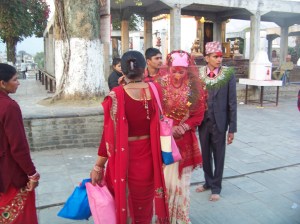
Barahi Temple is a popular wedding venue for the city’s wealthy, and as luck would have it, a ceremony was underway when we arrived. The temple itself is remarkably small, just enough room for the bride, groom, and what I assumed was the bride’s mother, along with the officiant. The rest of the family had to stand outside, looking somewhat bored.
When the couple emerged for photographs, they looked incredibly young, and the bride appeared absolutely terrified. I watched the first few pictures being taken, though I suspect those, too, may end up discarded, unless Photoshop can work miracles and copy-paste a few smiles!


Leave a comment